"By its very nature the beautiful is isolated from everything else. From beauty no road leads to reality."
~Hannah Arendt
Tuesday, September 9th to Tuesday, September 16th 2008
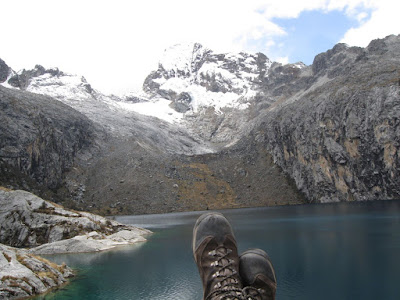
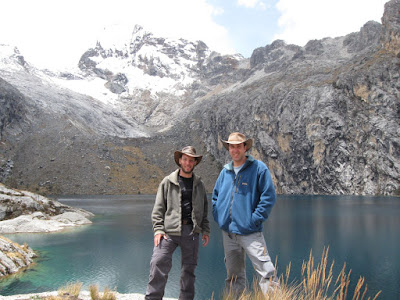
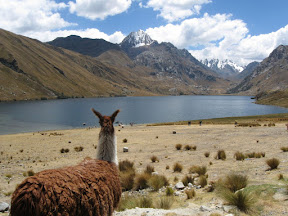
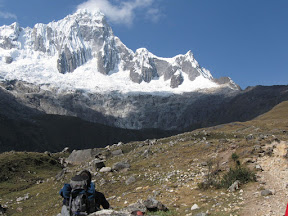
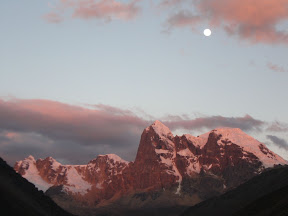 The landscapes of the Huayhuash take your breath away.Magnificent black snow capped mountains who watch guard over impossibly blue lagoons who feed roaring waterfalls and fast flowing streams. Such beauty cannot be described in words, it can not be reproduced in a photograph, in fact the photos attached to this post are a mere shadow of the real thing and I can just hope that they will help me revive my memory from those wonderful moments, don´t think that you can understand the beauty of the place by looking at them - if you can come to Huaraz and experience them for yourself, you won´t regret that decision. However you should know that as always such beauty comes with a price.The Huayhuash trekking area is difficult. you need to be acclimatized to heights, fit and willing to suffer. you should also be prepared to huge range of temperatures change as in blistering sun, torrential rain and wind driven sleet and snow - all in the course of a single day. Almost the entire trek take place between 4000 and 5000 meters above sea level and you need to traverse a mountain pass almost every day and some days you´ll have two passes to overcome ! But still the feeling you get when you finally make it to the pass and the view opens before you is more than a fair reward for all the hard work you put in...
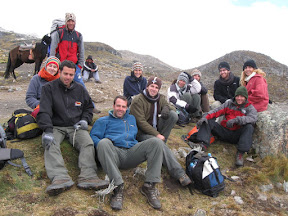 Before the trek started we had some last minutes changes: First we were informed that our Santa Cruz guide we asked for will join us again, second another couple of friends will join us setting our final number to 11 and lastly, Alex found a driver willing to drive us to the base camp saving up half a day walking. The sunny morning who met us outside the hotel as we loaded the van lifted our spirit a little as well. The good weather lasted almost through the entire ride, however as the van slowly progressed through the rough road to our first camping site near Matacancha, dark clouds covered the sun and as we disembark we got greeted by torrential rain and hail storm in which we setup our tents. We huddled inside the main tent and passed the time talking and playing cards, hot tea and popcorn did wonders to our moral. After a good hot meal we retired to our tents getting some rest for the hard day that awaited us.
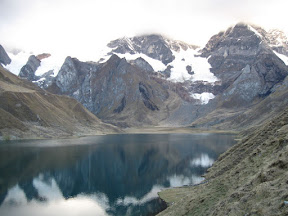 We woke up early and almost immediately started climbing the steep accent that led to the Cacananpunte pass, the trail zigzaged along the green mountain side and disappeared somewhere between the glaciers above us. There were still signs for the rain and sleet that continued all through the night, but it was a fine weather for climbing. When we got to the pass we were treated with a wonderful view of a wide green grass valley that reminded me the land of Rohan from the "Lord of the Rings" movie. As we descended we knew that there is still one more pass to traverse today and felt sorry for every hard gained meter of altitude lost... we at our launch on the shores of lake Mitucocha and headed for the Carhuac pass. The Carhuac was a mean pass. It did not seem hard at first with the relatively easy incline but as you gain altitude every step is hard and the pass itself was nowhere to be seen.. 10-15 we climbed up a small hill thinking that this is the pass - and every time we were disappointed to find out that the pass eluded us once again... by the time I got to the pass itself I was already exhausted and didn´t even noticed that finally the pass was under my feet. We got to our camping site on the shores of the beautiful lake Carhuacocha at sunset just in the right moment to see the last rays of sun bounce off the huge glacier that hanged over the mirror smooth lagoon.
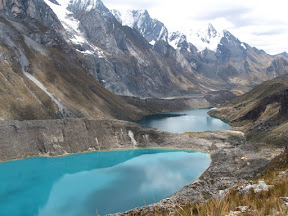 We got up early again to a frosty morning, still a bit tired from yesterday´s work but as we circumvented the lagoon the majestic view of the Yerupaja mountain lifted our spirits. We know that today´s trail was especially steep and that the emergency horse will not be following us. We walked for 2 hours and rested near the Quesillacocha lagoons also known as the "Mother and Daughter" as we rested we could see the trail up ahead - an almost vertical decent to the mighty Silla pass... Fortunately, at least for me, the climb was the easiest one so far and the spectacular view of the lagoons from above which got better and better as I climbed higher was a nice bonus. I felt a little sad as two thirds through the climb, the trail twisted into a small ravine blocking the view of the lagoons below. before making the last turn I stopped for a moment and tried to etch every detail into my mind. When we got to the pass itself it was snowing hard. Our cook, who walked with us, opened his backpack and started to make guacamole sandwiches, so we sat down on the ground and enjoyed the food and the view while snow started to pile on the ground. We walked through a weird valley of shallow rivers and shallow lakes for 2-3 hours before getting to our camp at Huayhuash. We´ve seen torrential rail fall on the mountains on both sides but luckily we only had to walk through a light drizzle.
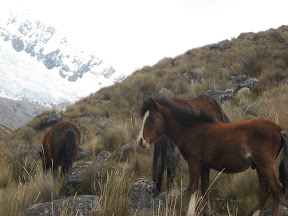
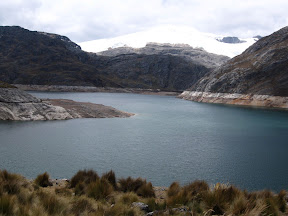 As we woke up and started walking we all felt a little excited - not only was this going to be an easy day, but we had a special treat waiting for us at the end - natural hot springs! we were so anxious to get a bath after 4 days that we tackled the nasty Portachuelo pass without a single complaint and as we descended to to Viconga lake thorough herds of llamas and Alpacas we had an extra bounce in our steps. We got to the campsite around noon, ate our lunch, packed towels and change of clothes and rushed to the springs. The springs were everything we expected to be and more.. a clear round pool with 40 degrees hot water that soothed our muscles and weary feet. We stayed for a couple of hours, showered in the smaller hotter pool and got to the camp slowly not wanting sweat in our fresh clothes.We all had a very good night sleep that day...
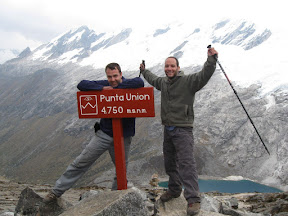
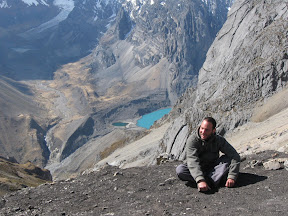 Our fifth morning on the trail was the coldest one yet. As we started to walk in the harsh cold morning we hoped that the climb to the Punta Cuyoc pass, the highest pass on the circuit at 5000 meters, will warm us. However the wind was relentless and moral started to drop. Suddenly out of nowhere, the two friends who joined us in the last day started to sing. It was hard to sing while you climb and struggle for air so the songs came out a little funny and people had to stop in mid sentence to breath from time to time, but the singing did the trick and the Cuyoc was later remembered as the easiest pass on the trek. By the time we got up, the small ponds were still frozen but the sun has come out and we were all in a very good mood. The amazing views at the pass lifted our spirits even further. It was with high spirit that we descended from the pass and sat down to eat and rest in the meadow below. We each had a decision to make - climb to the San Antonio pass to see the view or rest for half a day at the camp just one hour away. With the exception of two, we almost all decided to test ourselves in the climb - and what a climb it was! almost 700 meters of a trail so steep that on some parts I found myself crawling on all four limbs.. The last part was hard in particular consisting of fine brown gravel that sent you back one step down for every two steps up. I also managed to execute a spectacular fall into a 3 meter deep crevice - but other than my pride and a hole in pants I got off easy - in fact I got so pissed off from the fall that I almost run the remaining part. The pass did gave us a magnificent view for our efforts and we stayed for almost an hour enjoying it before we carefully returned the way we came and hiked to the camp.
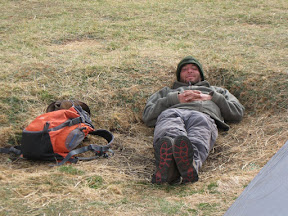 On our sixth day we had no pass to conquer and we started descending right off the bat for a change. The trail eased us down along a small river for almost 5 hours before we got to a small village called Huayllapa. Huayllapa who is reachable on foot and horses only was a very small village and the only one we saw during the trek. It was an opportunity to get some supplies, drink a cold coke and tend to our horse who needed a horseshoe replaced. Although not officially a pass, the climb back from the village proved to be a long and tiring affair. Gaining almost 1000 meters of altitude, it was easy to begin with and we enjoyed the oxygen filled air, but as we got higher and higher our legs needed rest and we struggled to breath again in the thin mountains air. By the time we got to our camp we all dropped like sacks of potatoes and drank our coca tea and eat our popcorn where we dropped.
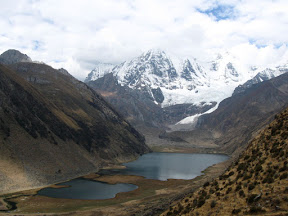 Our seventh day was one of the hardest but also one of the best in terms of views. We started with the Tapush pass who gave us a nice view of both the Huayhuash and Cordillera Blanca and than descended into a forested valley (very rare at those altitudes) and up again to the Punta Yauche pass which was steep and hard but also showed us the Yerupaja mountain from a good angle. As we descended down to camp near lake Jahuacocha, we had a magnificent view of the lake, Yerupaja above it and two hawks soaring up beneath us. We were also able to catch a mighty snow avalanche which roared and thundered for almost five minutes from the mountains to the lake below. We all felt a twinge of sorrow as we got ready to spend our last night on the road.
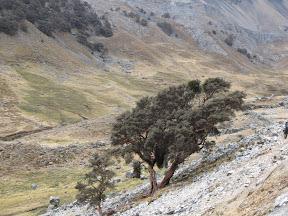 On our eighth and final day we got up early than usual. It was still dark outside when we ate and we started our hike with the first rays of sunlight. The day startd off easy walking an almost straight path along a water pipe that was laid deep into the mountain side, but as the hours progressed the sun and monotonous walk started to take their toil and we all wished that the trail will end and we´ll finally board the bus back to Huaraz. However the trail had one last surprise waiting for us and we found ourselves after 5 hours of walking 1000 meter above the bus station which awaited to us in Llamac. It was a harsh decend for our knees and legs. Needless to say that we were all very tired when we finally got on the bus... After settling in "Casa Jaimes" again and a very good shower, we all met for a very good dinner at a place called "Chilli Heaven" where I celebrated over a big dish of Chilli con Carne. It wasn´t even needed to be said that tomorrow will be dedicated to rest alone...
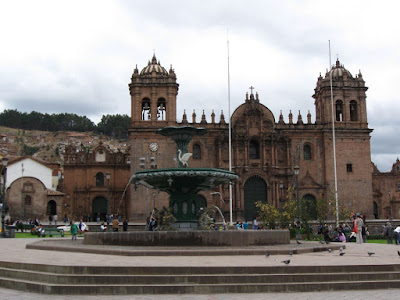 I arrived to the ancient Inca capital early on the morning of the Jewish new year´s eve. It was after my third night without proper sleep and at 6:00am the city haven`t properly woke up yet. As I wandered in the impressive Plaza de Armes waiting for the hostels to open their doors I was approached by an Hebrew speaking man who tried to convince me to try his hotel. I kindly refused but the Hebrew the man spoke was a clear sign on how big and influential is the Israeli tourist movment around the town, soon after when I started to see the signs in Hebrew and the Israeli flags I started to understand why they call Cuzco "The Israeli capital of South America". Since it was new year´s eve the city was packed with more Israelis than usual who came to spend the holidays in the city so finding a decent hostel proved to be a difficult task. After more than half a day I settled for a bad room with a very good shower and decided to find a better place as soon as I´ll find the time. All the wondering around got me a good understanding of the area around the central plaza where I will spend most of my time.After a decent dinner I decided to skip the traditional new year´s meal and catch a badly needed sleep instead. I slept for 14 hours through all the noise of people coming and going from the different parties.
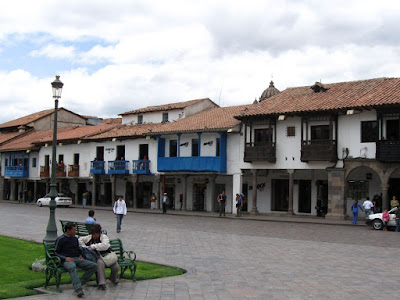 In the next morning I moved to a better room at the same hotel and start talking with the other tenants. Almost immediately I found out that Cuzco is not Huaraz. Where in Huaraz people were always on a trek, organizing for one or out for one day activities - in Cuzco it seem that most people were content with just hanging around the city. Since the Cuzco area has so much to offer I found this a little bit surprising but after a while I realized that it just that since Huaraz biggest attraction was the treks people came there to trek while in Cuzco I met the rest of the Israeli crowd, many of whom were interested only in clubbing, cheap dining and perhaps some thrills that didn´t required too much hard work. The trekking crowd was here as well - it was just a minority. The lazy environment and the fact that the end of the season was fast approaching worried me a little at first as I didn´t want to get stuck - but all well that ends well and I found a good group to hang around with and got to enjoy the city and rest a little more than I got to up to this point - which was a good thing since I needed the rest after a very hectic month.
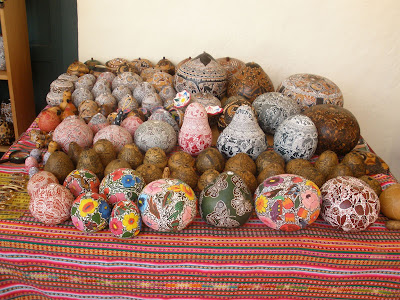 In the end I found that Cuzco is a great town. while not as comfortable as Huaraz, it has a lot more to offer between activities such as Salsa clubs (I even participated in a Salsa lesson), Museums and big markets all easily and readily accessible. I found two great places for breakfast or a light lunch - which were very useful since I often woke up late and hungry, at least 3-4 good restaurants for dinner and a good deal on Ice cream at the local McDonald's.. I also got to enjoy a variety of advantures outside the city from snowy mountains to jungles and lost Inca cities and one memorable afternoon on a hill at the outskirts...